The Vein Blog
Can Sun Exposure Cause Spider Veins?
6 Min ReadBy The Renew Vein Center team
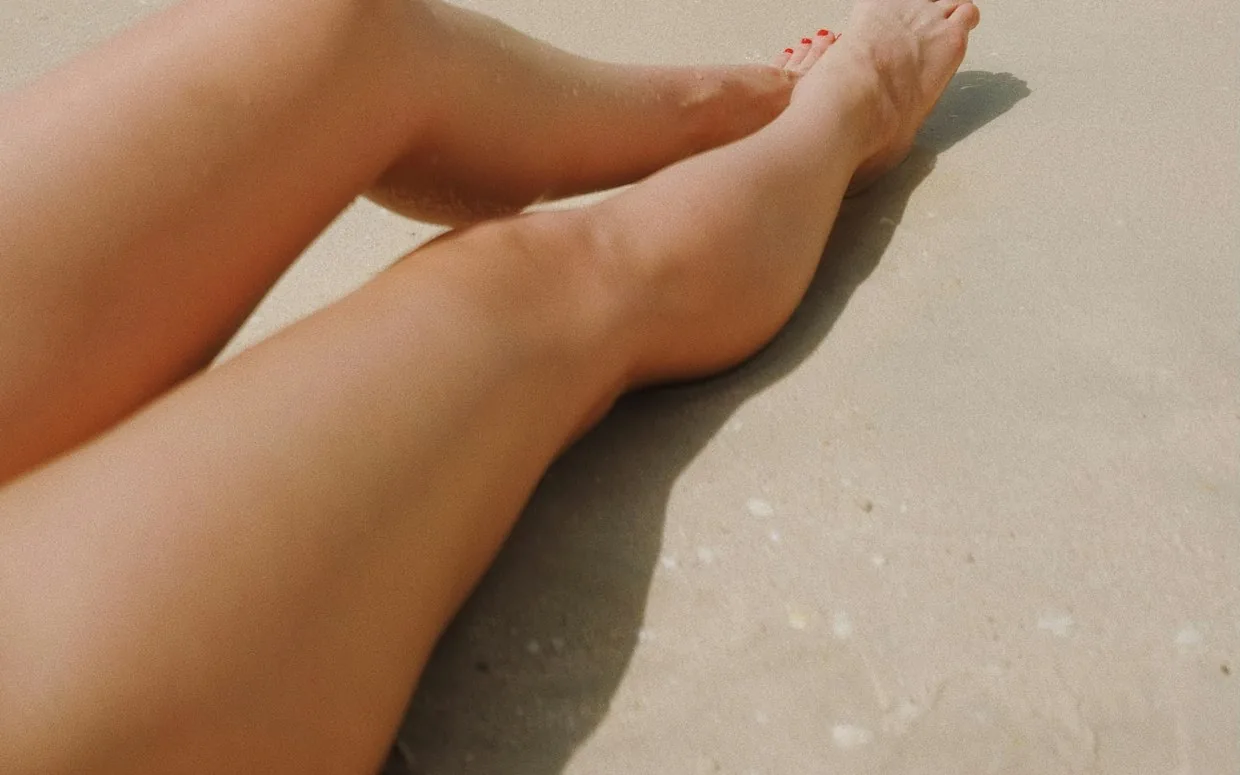
Every summer we hear the same question in our New York office. Someone comes back from a beach holiday, notices fine red or purple lines on their legs or across their cheeks, and wants to know whether the sun did it.
The honest answer is: partly. Sun is on the list of things that make spider veins more likely, and the Cleveland Clinic names time in the sun as a risk factor. But on your legs, the sun is rarely the thing that started it. Something is usually happening deeper down, and the sun just makes it easier to see.
First, what a spider vein actually is
Spider veins, or telangiectasias, are tiny blood vessels sitting just under the surface of your skin. They are red, blue or purple, they sit flat, and they spread out in thin lines that look like a web or the branches of a tree. They are usually between half a millimetre and one millimetre wide.
They are not the same as varicose veins. Varicose veins are larger, they bulge above the skin, and you can often feel them with your fingers. Spider veins are flat and you can only see them. The two can appear together, and often do, which matters later in this article.
Most spider veins do not hurt. When they do come with aching, burning, itching, heaviness or night cramps, that is usually a sign that the larger veins feeding them are struggling too.
What the sun actually does
Ultraviolet light from the sun breaks down collagen and elastin. Those two proteins are what keep your skin firm and springy, and they are also part of the support structure holding small blood vessels in place.
When that support weakens, two things happen at once. The small vessels near the surface stretch more easily and stay stretched. And the skin covering them gets thinner and more transparent, so vessels that were always there become much easier to see.
This is why sun damage shows up most clearly on the face. Cheeks, the sides of the nose and the chin take years of direct light, the skin there is thin to begin with, and fine red lines appear. Dermatologists see this pattern constantly in people who have spent a lot of time outdoors.
Why legs are a different story
On your legs, the main driver is almost never the sun. It is your vein valves.
Leg veins have to push blood upwards, against gravity, all day long. They do it with a series of one way valves. Each valve opens to let blood move up toward your heart, then closes so it cannot fall back down. When those valves stop sealing properly, blood slides backwards and pools in the vein below. Doctors call this venous reflux or venous insufficiency.
That pooling raises pressure inside the vein. The pressure pushes outward into the smaller vessels branching off it, and those small vessels stretch. Over months and years, they become visible as spider veins.
So the sun can thin the skin in front of them and make them more obvious. But the pressure that stretched them in the first place came from inside, not from above.
This is the reason treating leg spider veins without checking the veins underneath often disappoints. The visible lines fade, then new ones appear in the same area, because the pressure that created them was never addressed.
What makes spider veins more likely
Risk factors commonly listed by medical sources include:
- A close family member with spider veins or varicose veins
- Standing or sitting for long stretches, which is most jobs
- Pregnancy, and the hormone changes that come with it
- Hormonal birth control, or hormone therapy for menopause
- Carrying extra weight, which adds pressure on leg veins
- Smoking, now or in the past
- Getting older, as vein walls and valves lose elasticity
- A lot of time in the sun
Look at that list and you will notice the sun is one item out of eight. Family history and long hours on your feet do far more of the work.
Does heat make it worse?
Heat and sun arrive together, so they get blamed together, but they act differently.
When you are hot, your body widens the blood vessels near your skin to let heat escape. That is normal and healthy. But if your vein valves are already leaking, those widened veins pool more blood, and your legs feel heavier and look more swollen by the evening.
This is why a lot of people first notice their veins in summer, on holiday, or after a long hot day. The veins did not appear that week. They became easier to see and easier to feel.
How to protect your legs and your skin
- Use sunscreen on your legs, not just your face and shoulders. Most people forget their legs entirely.
- Move every hour if your job keeps you still. A two minute walk, or simply rising onto your toes twenty times, uses your calf muscles to push blood upward.
- Put your legs up above heart level for fifteen minutes at the end of the day.
- Drink enough water in hot weather. Dehydration thickens your blood and makes circulation harder work.
- Walk, cycle or swim regularly. Your calf is the pump your veins depend on, and it only works when you use it.
- If you already have visible veins, ask about compression stockings before a long flight or a long day standing.
When it is worth getting checked
Spider veins on their own are usually a cosmetic matter. But they can also be the first visible sign of a vein problem that is still developing underneath.
Book an appointment if you also notice:
- Aching, throbbing or heaviness in your legs that builds through the day
- Swelling around your ankles that is worse in the evening
- Cramps at night, or restless legs that keep you awake
- Itching or dry, flaky skin around your ankles
- Brown staining of the skin near the ankle
- Any skin that breaks down and will not heal
Sudden swelling in one leg, with pain, warmth or redness, is different. That needs same day medical attention, because it can be a blood clot.
What treatment looks like
For spider veins themselves, sclerotherapy is the usual treatment. A very fine needle puts a solution into the vessel, the vessel seals shut, and your body gradually absorbs it. Blood simply takes a healthier route instead.
If an ultrasound scan shows that larger veins underneath are leaking, those are treated first. Closing the source means the smaller vessels are no longer under pressure, and the result lasts.
At our New York office a consultation starts with a duplex ultrasound, because it is the only way to see what the valves are doing. Looking at the surface alone tells you half the story.
Key takeaways
- Sun exposure is a genuine risk factor, mostly because UV light thins skin and weakens the support around small vessels.
- On the face, sun is often the main cause. On the legs, it rarely is.
- Leg spider veins usually start with vein valves that no longer seal, which raises pressure in the smaller vessels.
- Heat does not create spider veins, but it widens veins and makes existing ones more noticeable.
- Treating the surface without checking the veins underneath is why spider veins often come back.
Sources
- Cleveland Clinic: Spider Veins
- NHS: Varicose veins
- Johns Hopkins Medicine: Chronic Venous Insufficiency
This article is general information about vein health. It is not medical advice and it cannot replace an examination. Please speak to a qualified clinician about your own symptoms before making any decision about treatment.
Wondering what is going on with your legs?
A consultation at 515 Madison Avenue, New York, NY 10022 starts with an ultrasound scan, because the surface only tells half the story. Mon to Fri, 9:00 AM to 5:00 PM.